
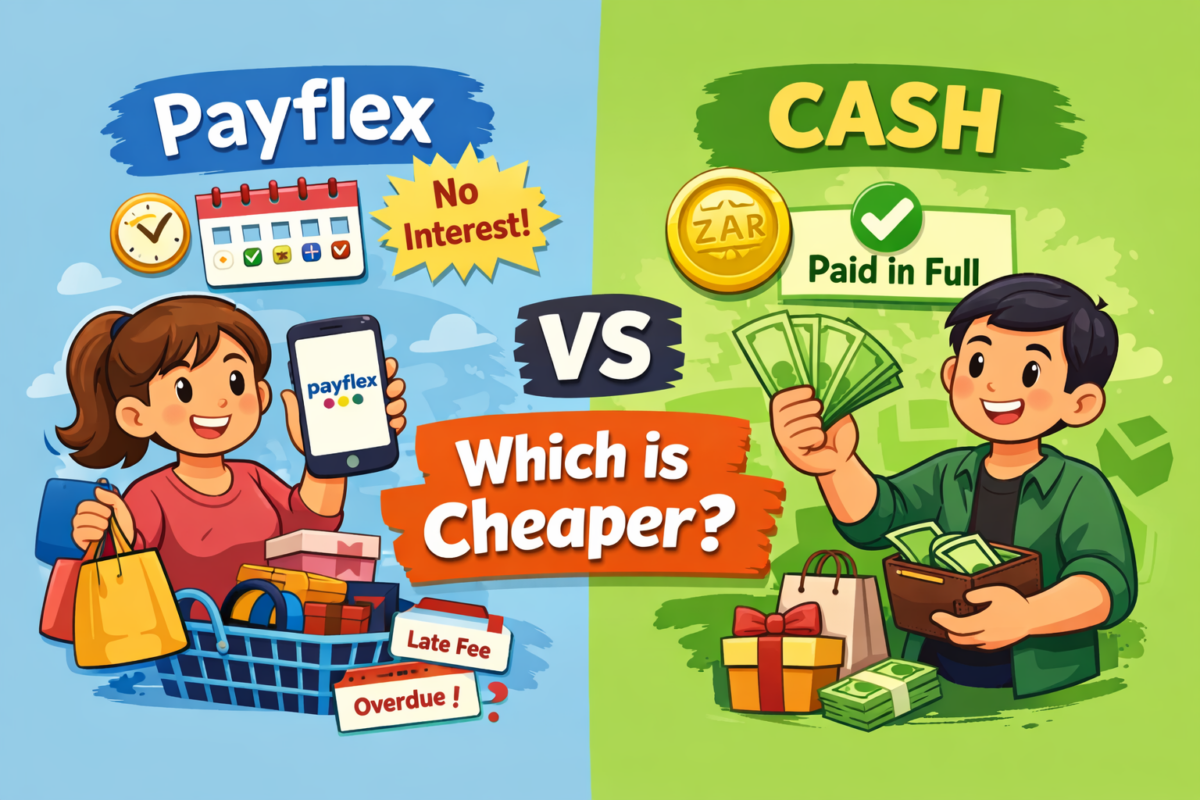
Many South African shoppers are comparing flexible payment options to manage rising living costs. Payflex allows purchases to be split into smaller instalments over time, while cash or debit payments settle the full amount immediately.
In this article you will learn:
- How Payflex instalments compare to paying cash upfront
- When Payflex can help manage short-term cash flow
- When paying cash is usually the safer and cheaper option
- How to avoid extra fees when using Buy Now Pay Later services
With rising living costs in South Africa, many shoppers are comparing different payment options to stretch their budgets. now that we know how payflex works from the previous article – Payflex explained: how to buy now pay later works in south africa, one common question is whether using Payflex is actually cheaper than paying cash upfront, or if it simply delays the pain.
This article breaks down the real cost differences in the Payflex vs cash comparison, and when each option makes the most sense.
Understanding Cash Payments
Paying cash (or debit card) means you settle the full amount immediately. This method has clear advantages:
- No future payment obligations
- No risk of late fees
- Simple and transparent budgeting
Cash payments work best when you already have the funds available and want to avoid any form of financial commitment.
How Payflex Changes the Cost Equation
| Feature | Payflex | Cash / Debit Card |
|---|---|---|
| Payment timing | 4 payments over 6 weeks | Full amount paid immediately |
| Interest | Interest-free if payments are made on time | No interest |
| Risk of extra fees | Possible if payments are missed | No risk of late fees |
| Budget flexibility | Helps spread costs across multiple paydays | Requires full amount available |
| Best used for | Planned purchases or higher-cost items | Everyday spending and simple budgeting |
If you already have the cash available, paying upfront is usually the safest option. However, Payflex can be useful for spreading the cost of essential purchases across the month as long as you keep track of your repayment dates.
Payflex allows you to split a purchase into four interest-free payments, making higher-cost items more accessible in the short term.
In theory, Payflex does not cost more than cash – as long as payments are made on time. The total amount paid is the same as the original price.
However, missed or late payments may result in additional fees, which can make Payflex more expensive than paying cash.
When Payflex Can Be Cheaper Than Cash
Payflex may be the better option when:
- You need an essential item but don’t want to empty your account
- You want to manage cash flow across the month
- You have predictable income and can meet payment dates
In these cases, spreading payments can reduce short-term financial pressure without increasing total cost.
When Cash Is the Better Choice
Paying cash is usually cheaper when:
- You already have enough funds available
- The purchase is non-essential
- You want to avoid any risk of missed payments
Cash removes the possibility of extra fees and keeps spending discipline tight.
Payflex vs Cash: The Real Answer
There is no one-size-fits-all answer. Payflex is not more expensive than cash by default, but it requires responsible use. Cash is simpler and safer for everyday purchases, while Payflex can be useful for planned expenses that benefit from flexible payment timing.
The key difference comes down to discipline, not price.
Where to Find Payflex-Friendly Deals
If you’re considering Payflex, it helps to know which stores and services support it.
Explore Payflex-friendly deals and savings here:
Final Thoughts
Whether you choose Payflex or cash, the smartest option is the one that fits your budget and avoids unnecessary fees. Understanding how each payment method works helps you make informed decisions and stay in control of your finances.
View all articles in the Kasi Savings category